Westworld
These violent delights have violent ends.
Don’t miss the next trailer.
Five picks a week, in your inbox, free. Unsubscribe anytime.
We’ll send the English newsletter.
Westworld turns a theme park into a moral pressure cooker, where fantasy feels consequence-free—until the machines begin to remember. What starts as escapism becomes a chilling meditation on choice, control, and the price of desire.
Westworld (2016) arrives as a bold collision of Sci-Fi & Fantasy and Western mythmaking, staging its drama in a frontier built to satisfy every impulse. The setting looks like a romanticized past, but it’s engineered with near-future precision—an immersive playground where visitors can chase heroism, indulge cruelty, or simply drift through curated adventure.
At the heart of the story is a question that refuses to stay theoretical: what happens when artificial beings designed to serve begin to develop a sense of self? The series frames consciousness not as a switch that flips, but as a slow, unsettling accumulation—memories that won’t erase cleanly, patterns that start to feel like pain, and instincts that evolve into intention.
That transformation lands with particular force through performances by Evan Rachel Wood and Thandiwe Newton, whose characters navigate loops that are supposed to reset but instead deepen. Jeffrey Wright brings a searching, philosophical gravity to the human side of the experiment, while Tessa Thompson adds sharp corporate tension that makes the park’s glossy promise feel increasingly unstable.
As a Western, Westworld understands the genre’s obsession with lawlessness and legend; as science fiction, it interrogates who gets to write the rules. Ed Harris injects menace and mystery into the park’s mythology, and the ensemble—including James Marsden, Angela Sarafyan, and Aaron Paul—helps widen the story beyond a single mystery into a broader reckoning with identity and agency.
Ultimately, Westworld isn’t just about a place where anything is permitted—it’s about what permission does to people, and what denial does to those built to endure it. For more editorial coverage and updates on sci-fi television and modern genre classics, visit https://trailerix.com.
Cast

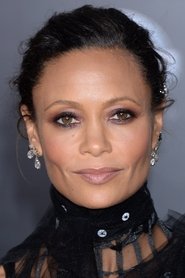
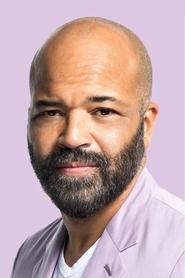

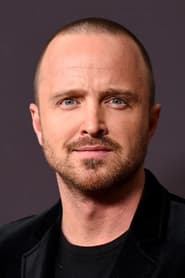
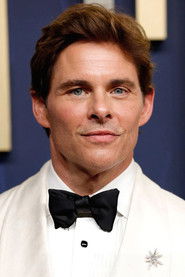

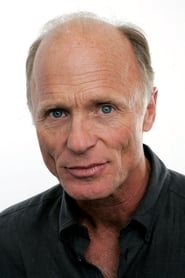
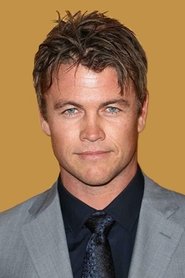
Image © TMDB
Crew

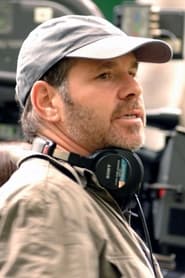
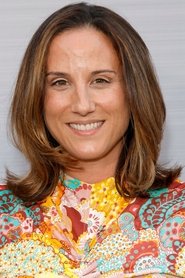

Image © TMDB
Frequently asked questions
What is Westworld (2016) about, in simple terms?
It’s set in a high-end Western-themed park where guests can live out any fantasy, but the artificial “hosts” inside the park begin to change in ways their creators didn’t plan.
Is Westworld more sci-fi or Western?
It’s both: the park uses classic Western imagery and rules of the frontier, while the core story is science fiction focused on artificial intelligence, memory, and control.
Who are the main cast members in Westworld?
The series features Evan Rachel Wood, Thandiwe Newton, Jeffrey Wright, Tessa Thompson, Aaron Paul, James Marsden, Angela Sarafyan, and Ed Harris.
What themes does Westworld explore?
It examines free will versus programming, the ethics of exploitation, how power shapes morality, and what it means to become conscious when your world is designed by someone else.
Do I need to know anything before watching Westworld?
No prior knowledge is required. Going in fresh can enhance the experience, since the story is built around discovery, shifting perspectives, and slowly revealed truths.
Comments
Be the first to comment.
Leave a comment