"Wuthering Heights"
Come undone.
Don’t miss the next trailer.
Five picks a week, in your inbox, free. Unsubscribe anytime.
We’ll send the English newsletter.
Emerald Fennell brings a bold new pulse to “Wuthering Heights” (2026), where love isn’t a refuge but a force that scorches everything it touches. With Margot Robbie and Jacob Elordi at the center, this classic tragedy returns with fresh urgency and bruising intimacy.
Some stories don’t age quietly—they keep clawing their way back into the present. “Wuthering Heights” (2026), directed by Emerald Fennell, revisits Emily Brontë’s storm-lashed romance with a modern filmmaker’s appetite for psychological precision. Set in 18th-century England, the film frames desire and class not as background themes, but as the very weather of the narrative: unpredictable, violent, and impossible to ignore.
At the heart of the drama is Heathcliff, a man shaped by exclusion and sharpened by longing, whose devotion to Catherine Earnshaw becomes both sanctuary and sentence. Jacob Elordi steps into the role with a brooding physicality, while Margot Robbie brings Catherine a volatile mix of magnetism and calculation—someone caught between the pull of genuine feeling and the pressure of a world that measures worth in land, lineage, and appearances.
Fennell’s sensibility is well suited to a romance that refuses to behave. Rather than smoothing the edges into period prettiness, this adaptation leans into the story’s moral discomfort: love that curdles into possession, tenderness that turns transactional, and the quiet humiliations that class systems normalize. The result is a romance-drama that doesn’t ask you to approve of its characters—only to understand how they unravel.
The supporting cast deepens the film’s social architecture, with Hong Chau, Alison Oliver, Shazad Latif, Martin Clunes, Ewan Mitchell, and Amy Morgan anchoring the household dynamics and the wider community that polices who is allowed to love whom. In this telling, the moors feel less like scenery and more like a pressure chamber, amplifying every slight and every secret until they become fate.
For viewers drawn to emotionally intense period dramas, “Wuthering Heights” (2026) promises a return to the kind of romance that hurts on purpose—where passion is inseparable from consequence. For updates, trailers, and editorial coverage, follow the film on https://trailerix.com.
Cast

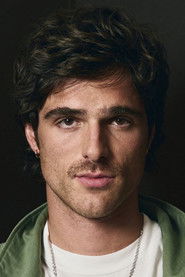

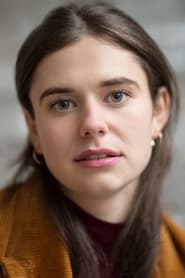


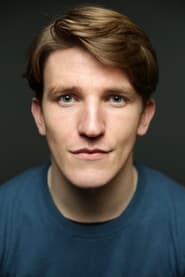
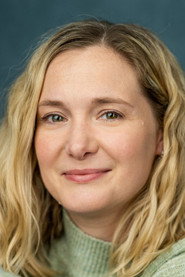
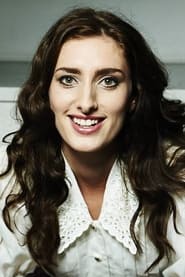

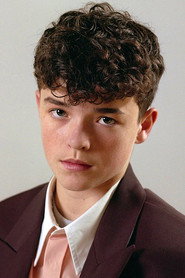
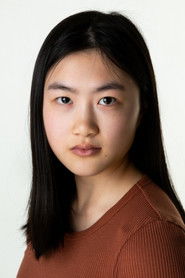
Image © TMDB
Crew


Image © TMDB
Frequently asked questions
What is Wuthering Heights (2026) about?
It follows Heathcliff as his love for Catherine Earnshaw collides with the expectations of her wealthy world, turning devotion into a tragic chain of consequences in 18th-century England.
Who directs Wuthering Heights (2026)?
The film is directed by Emerald Fennell.
Who stars in Wuthering Heights (2026)?
The cast includes Margot Robbie, Jacob Elordi, Hong Chau, Alison Oliver, Shazad Latif, Martin Clunes, Ewan Mitchell, and Amy Morgan.
Is Wuthering Heights (2026) a romance or a drama?
It’s both—built as a romance that intensifies into drama, with class pressure and emotional obsession driving the tragedy.
What makes this adaptation different in tone?
This version emphasizes the psychological and social costs of love under rigid class rules, aiming for raw intensity over comforting period polish.
Comments
Be the first to comment.
Leave a comment