Resident Evil
A new era of evil.
Don’t miss the next trailer.
Five picks a week, in your inbox, free. Unsubscribe anytime.
We’ll send the English newsletter.
Resident Evil (2026) drags the apocalypse down to street level, following a medical courier whose routine delivery turns into a desperate run for survival. With Zach Cregger at the helm, horror and science fiction collide in a lean, pressure-cooker reboot.
In Resident Evil (2026), the end of the world doesn’t begin with a grand speech or a distant news report—it hits mid-route, mid-delivery, with a courier bag on the shoulder and nowhere safe to stop. Bryan (Austin Abrams) is just trying to complete a medical drop when an abrupt outbreak fractures the city’s logic, turning familiar corridors, parking lots, and back entrances into a maze of escalating danger. The premise is simple on paper, but it’s the kind of simplicity that sharpens every decision into a life-or-death wager.
Director Zach Cregger brings a grounded, nerve-tight sensibility to the franchise, leaning into the terror of not having time to understand what’s happening before it’s already happening to you. The film’s science-fiction edge isn’t about shiny tech; it’s about systems—medical supply chains, emergency protocols, and urban infrastructure—failing in real time. That collapse gives the horror its bite: survival isn’t a heroic pose here, it’s a series of imperfect choices made under blaring alarms and shrinking options.
The courier angle is a smart pivot for a Resident Evil story because it naturally threads Bryan through spaces most people only glimpse: loading bays, hospital service halls, secured doors, and the anonymous arteries that keep a city alive. When those arteries clog, the movie finds tension in movement itself—every shortcut can be a trap, every detour a gamble, every “safe” building a question mark. The result is a thriller-like momentum that keeps the outbreak personal rather than abstract.
Along the way, a strong ensemble—Zach Cherry, Kali Reis, Paul Walter Hauser, and Johnno Wilson—adds texture to the panic, sketching the kinds of allies and liabilities that appear when order vanishes. In a world where information is scarce and trust is expensive, even brief encounters can reshape the route ahead. The film plays with that uncertainty, letting character dynamics become another form of suspense.
For fans of horror and science fiction, Resident Evil (2026) promises a reboot that prioritizes immediacy: a contained sprint through a widening catastrophe, where the scariest part isn’t just what’s out there—it’s how quickly the ordinary becomes unusable. If you’re tracking updates, trailers, and release coverage, keep an eye on Trailerix for the latest on this new chapter.
Cast





Image © TMDB
Crew





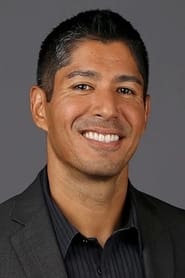



Image © TMDB
Frequently asked questions
What is Resident Evil (2026) about?
It centers on Bryan, a medical courier making a delivery when a sudden outbreak detonates around him, forcing him into a frantic fight to stay alive.
Who directs Resident Evil (2026)?
The film is directed by Zach Cregger.
Who stars in Resident Evil (2026)?
The cast includes Austin Abrams, Zach Cherry, Kali Reis, Paul Walter Hauser, and Johnno Wilson.
What genres does Resident Evil (2026) belong to?
It blends Horror and Science Fiction, using outbreak-driven survival tension with a speculative edge.
Is Resident Evil (2026) a reboot or a sequel?
It’s positioned as a new take on the Resident Evil story world, focusing on a fresh scenario and characters rather than continuing a single prior storyline.
Comments
Be the first to comment.
Leave a comment