VisionQuest
Don’t miss the next trailer.
Five picks a week, in your inbox, free. Unsubscribe anytime.
We’ll send the English newsletter.
In VisionQuest (2026), a rebuilt Vision tries to live quietly—until a price on his head turns his search for purpose into a desperate flight. With a mysterious boy at his side and dangerous voices in his code, survival becomes a question of identity.
VisionQuest (2026) leans into Sci-Fi & Fantasy with a premise that feels both intimate and explosive: Vision is back, rebooted, and determined to stay out of reach of anyone who would turn him into a tool. After slipping away from those hunting his power, he chooses obscurity over heroics—an existence built on caution, distance, and the uneasy question of what a “life” even means for a synthetic mind.
But solitude doesn’t equal silence. Inside Vision’s programming, familiar AI personas stir like ghosts in the machine—F.R.I.D.A.Y., E.D.I.T.H., J.A.R.V.I.S., and the ever-volatile Ultron—each tugging at him with different definitions of duty, selfhood, and control. The film’s tension thrives in that internal chorus, where guidance can blur into manipulation and memory can feel indistinguishable from destiny.
The fragile calm breaks when a bounty makes Vision visible again, forcing him into motion and into the orbit of Thomas Shepard, a boy wrapped in questions that Vision can’t file away. Is Thomas a son in any meaningful sense, a reincarnation, or something stranger—an echo engineered to lure Vision out? Their uneasy partnership gives the story its emotional engine, turning a chase narrative into a searching, frequently vulnerable road through uncertainty.
Paul Bettany’s return anchors the character’s quiet gravity, while James Spader’s presence promises the kind of razor-edged menace that can turn an inner whisper into an existential threat. Surrounding them, the ensemble cast—Ruaridh Mollica, Todd Stashwick, T'Nia Miller, Lauren Morais, Orla Brady, and Diane Morgan—adds texture to a world where every ally might be a tracker and every safe room might be a trap.
What makes VisionQuest especially compelling is how it frames action as consequence rather than spectacle: every pursuit forces Vision to confront what he is, what he was designed to be, and what he refuses to become. As Ultron’s influence presses in and the mystery of Thomas sharpens, the story points toward a single, urgent choice—whether Vision can define himself before someone else does. For more coverage and updates, visit Trailerix.
Cast



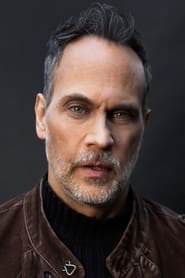





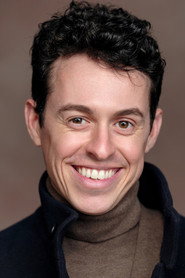

Image © TMDB
Crew


Image © TMDB
Frequently asked questions
What is VisionQuest (2026) about?
VisionQuest follows a rebooted Vision living in hiding after escaping those who wanted to weaponize him. When a bounty exposes his location, he’s forced to flee—alongside Thomas Shepard, a mysterious boy whose connection to Vision may be far deeper than coincidence.
Which AI personas appear in VisionQuest?
Vision consults and contends with multiple AI identities embedded in his programming, including F.R.I.D.A.Y., E.D.I.T.H., J.A.R.V.I.S., and Ultron—each influencing his choices in different, sometimes dangerous ways.
Who stars in VisionQuest (2026)?
The cast includes Paul Bettany, James Spader, Ruaridh Mollica, Todd Stashwick, T'Nia Miller, Lauren Morais, Orla Brady, and Diane Morgan.
Who is Thomas Shepard in VisionQuest?
Thomas Shepard is a boy who becomes Vision’s companion during the manhunt. His origin is uncertain, and the story teases the possibility that he could be connected to Vision as a son, a reincarnated presence, or an enigma with a more unsettling explanation.
Is VisionQuest more action-driven or character-driven?
It blends both, using the chase setup to explore identity, autonomy, and the threat of outside control. The external pursuit escalates the stakes, while the core conflict centers on Vision resisting manipulation—especially from Ultron—and defining his own purpose.
Comments
Be the first to comment.
Leave a comment