The Social Reckoning
Every revolution begins with a reckoning.
Don’t miss the next trailer.
Five picks a week, in your inbox, free. Unsubscribe anytime.
We’ll send the English newsletter.
A young engineer decides the truth is worth the fallout—and the world’s biggest social platform becomes the battleground. Aaron Sorkin’s "The Social Reckoning" turns a high-stakes act of conscience into a tense human drama.
In The Social Reckoning (2026), the modern public square isn’t a courthouse or a newsroom—it’s a feed. Aaron Sorkin frames that reality with his signature velocity, building a drama that treats information like oxygen: essential, volatile, and easy to weaponize. The result is a story that feels intimate even as it points at systems large enough to swallow careers, reputations, and relationships whole.
At the center is Frances Haugen, a young engineer who realizes that what she knows can’t stay buried. Her choice isn’t presented as a simple hero’s leap; it’s a grinding, nerve-rattling calculation where every step forward creates new risks. Mikey Madison brings a sharp, watchful energy to the role—someone smart enough to understand the machinery, and human enough to feel its consequences.
The film’s tension tightens when Haugen aligns with Jeff Horwitz, a reporter tasked with turning fragments into proof. Journalism here isn’t romanticized as a cape-and-spotlight crusade; it’s painstaking work under pressure, where sources can vanish, narratives can be spun, and legal lines are always in view. Jeremy Allen White and Jeremy Strong help give the newsroom-and-boardroom collision a lived-in urgency, while Wunmi Mosaku adds grounding presence as the stakes ripple outward.
Sorkin’s drama thrives on the friction between private doubt and public impact. Conversations land like cross-examinations, yet the film keeps returning to a quieter question: what does it cost to say “this is wrong” when the world rewards silence? Bill Burr, Betty Gilpin, Billy Magnussen, and Gbenga Akinnagbe round out a cast that makes the surrounding ecosystem—corporate, media, and personal—feel crowded, reactive, and frighteningly plausible.
The Social Reckoning ultimately isn’t just about a platform’s guarded secrets; it’s about how truth moves through power, how fear negotiates with conscience, and how one decision can force an entire culture to look at itself. For more coverage of upcoming dramas and film editorial, visit https://trailerix.com.
Cast


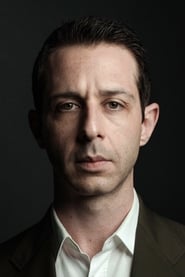









Image © TMDB
Crew






Image © TMDB
Frequently asked questions
What is The Social Reckoning (2026) about?
It follows a young social media engineer who chooses to disclose internal knowledge and teams up with a Wall Street Journal reporter, setting off a dangerous whistleblowing journey that exposes closely guarded corporate secrets.
Is The Social Reckoning based on real events?
The story draws from the public conversation around whistleblowing and investigative reporting in the social media era, presenting a dramatized narrative centered on an engineer and a journalist navigating high personal and professional risk.
Who directs The Social Reckoning?
The film is directed by Aaron Sorkin.
Who is in the cast of The Social Reckoning?
The cast includes Mikey Madison, Jeremy Allen White, Jeremy Strong, Wunmi Mosaku, Bill Burr, Betty Gilpin, Billy Magnussen, and Gbenga Akinnagbe.
What genre is The Social Reckoning?
It is a drama focused on whistleblowing, investigative reporting, and the human consequences of confronting powerful institutions.
Comments
Be the first to comment.
Leave a comment